
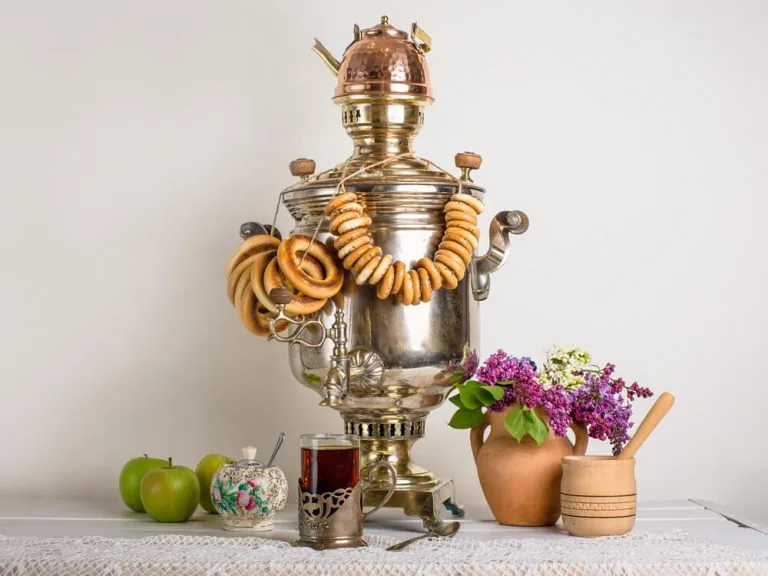
We continue our journey on the trail of tea traditions, and this time we take you to Russia. It is there that for more than 300 years aromatic tea (called chai) has been prepared in a unique way - using a samovar, a richly decorated vessel with a special faucet on the front and a teapot on top. Of course, we realize that modern Russians use other paraphernalia on a daily basis, but the classic samovar still holds a place of honor in many homes and is brought out for special occasions.
Tea with a Slavic soul
Exactly how tea got to Russia is unknown, but there is no doubt that it made a real furore there. The explosion of its popularity occurred in the 19th century - at that time it was drunk by everyone, from the poorest workers to the rich aristocracy and the tsar himself. The important role that kaj played in the family, social and moral life of Russia at that time is evidenced by references to it in the most important works of literature of the period, such as the works of Chekhov and Tolstoy. The nineteenth century was also the period of the spread of samovars, and with them the development of the ritual of brewing tea in this very vessel.
Step by step
How did such a "ceremony" proceed? Well, the housewife first had to light a fire in the samovar with wood or pinecones, then fill the container with water and bring the liquid to a boil. She would pour large quantities of black leaf tea into a separate teapot and brew as desired, and then place the teapot on top of the samovar. This allowed the tea essence to maintain the right temperature for up to several hours. The brew prepared in this way had to be poured into the bottom of glasses, preferably placed in decorative metal baskets, and later topped off with hot water poured from the samovar's faucet. Strong, bitter kvaj was drunk accompanied by sweet jam, honey or sugar, but these were not dissolved in the glass as we are accustomed to in our country. Russians coped in a different way - they first scooped a bit of jam into their mouths or put a sugar cube on their tongue, then sipped the tea and waited for the flavors to mix together naturally. This took quite a long time, but few people counted the time. More important was the pleasure of drinking tea in good company.
As we mentioned earlier, nowadays the use of a samovar is no longer as popular as it used to be, so the preparation of tea the Russian way has been greatly simplified. You will get a similar effect by brewing a very strong black tea essence in a classic teapot, then pouring it into the bottom of a glass and topping it off with boiling water. Serve the drink with homemade jam, lemon or sugar cubes, and the atmosphere of the original will be preserved ? Good luck.
Buy online
Check also
Can you drink green tea while pregnant?
Pregnancy is a time when every expectant mother carefully examines her eating habits and seeks reliable information about the safety of the products she consumes. Expectant mothers often check whether green tea is safe to drink during pregnancy because they want to be absolutely sure that the chosen infusion is completely safe for the baby's health. It's worth knowing the specific rules for its consumption. The most important […]
Does tea raise blood pressure? Everything you need to know
Many hot tea lovers, reaching for their next cup of tea throughout the day, wonder if tea raises blood pressure. The topic of theine's effect on the circulatory system is highly controversial, as the body's response depends on the type of tea and its preparation method. In this guide, we'll explain how different varieties affect blood vessels and help you understand whether your favorite […]

Is tea healthy? Check out its properties and contraindications.
Wondering if drinking tea is healthy as you reach for another cup of your favorite infusion throughout the day? This aromatic beverage has been with us for thousands of years, and modern science is increasingly confirming its unique effects on the human body. In this guide, we'll explore what's hidden in tea leaves, how different varieties support our well-being, and what […]