Oolong tea - properties. Learn about its effects
Share
For years, oolong tea has attracted the attention of people who are looking for an infusion that combines depth of flavor with mild but noticeable effects. Its flavor cannot be easily pigeonholed, as it ranks between green and black tea, offering the best of both. If you're interested in the properties of oolong tea, this guide will help you understand how it works, when it's worth reaching for it and why it's increasingly finding its way into your daily cup.
Key information from the article:
- Oolong tea is a partially oxidized tea whose properties and flavor rank between green and black tea.
- The partial oxidation of the leaves is responsible for a complex flavor profile and a balanced, mild stimulant effect.
- Health properties of oolong tea include support for concentration, metabolism and digestion.
- Oolong is perfect for multiple brews, with each infusion revealing different flavor notes.
- It comes in two main styles: a light one with a fresh, floral character and a dark one with deep, roasted notes.
What is oolong tea?
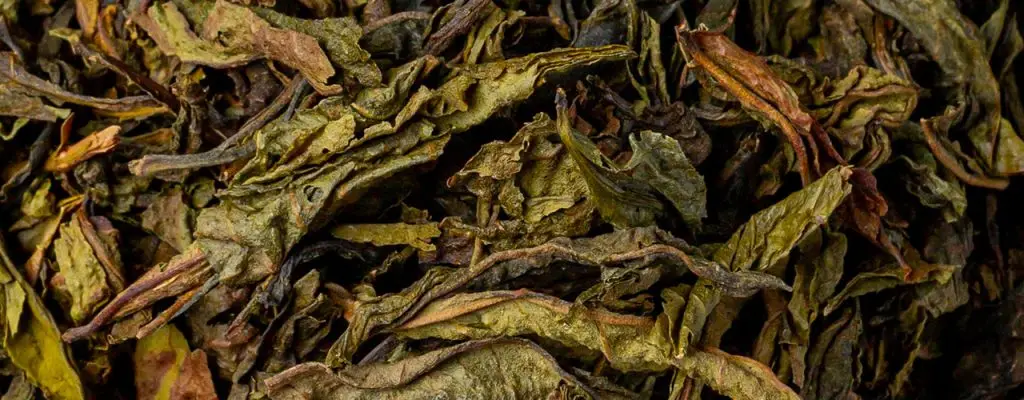
Before we get into the details, it's worth answering the question of what it actually is Oolong tea. It is a partially oxidized tea, whose degree of oxidation is between green and black tea. It is this stage of production that determines its unique character, complex taste and wide spectrum of effects.
Oolong is made from the leaves of the Camellia sinensis tea plant, just like any classic tea, but the way they are processed gives the brew a completely different profile from that of the green tea or black tea.
Compared to other types of tea oolong is distinguished by the fact that it combines freshness with depth, creating a brew with a very balanced character.
How is oolong tea made and why does it have such complex properties?
The process of oolong production requires a great deal of precision and experience. After harvesting, the leaves are subjected to controlled wilting, followed by gentle disturbance of their structure, which initiates oxidation. The tea master decides at what point to stop this process to maintain the desired balance between freshness and depth.
It is the partial oxidation that makes the properties of oolong include both the stimulation typical of green tea and the more pronounced flavor notes associated with black tea. Each processing step affects not only the aroma, but also the content of active substances.
Oolong tea - health properties worth knowing
Regularly drinking oolong can support the body on several levels. The infusion contains polyphenols that help neutralize free radicals and promote natural cell protection. Caffeine combined with L-theanine has a milder effect than in coffee, improving concentration without the feeling of sudden stimulation.
The health properties of oolong tea also include metabolism support, which is why it often appears in the diets of figure-conscious people. The infusion can also promote digestion and help keep energy levels stable throughout the day, without sudden drops.
How do you brew oolong to bring out its best qualities?
This, how to brew tea, has a huge impact on the taste and performance of the oolong. It's best to use water at a temperature of about 85-95°C, adjusting it to the specific style of tea. It's a good idea to steep the leaves briefly, starting with a few tens of seconds, and then gradually increasing the time with successive infusions.
Oolong is perfect for multiple brews, as it reveals a different facet with each successive infusion.

When is it best to reach for oolong tea?
Oolong will work especially well during the day when you need focus and steady energy. Thanks to its balanced effect, it goes well with both mental work and a quiet break after a meal. In the early evening, it's a good idea to brew it longer and at a slightly lower temperature so that the infusion remains milder.
By consciously adjusting the brewing method to the time of day, you can realize the full potential of this tea.
What does oolong tea taste like and what makes it different?
One of the biggest advantages of oolong is its complex flavor profile. Depending on the degree of oxidation, the brew can be associated with flowers, fruit, honey or gently roasted notes. The flavor often develops gradually, revealing more layers with subsequent sips.
In practice, one encounters two main styles of oolong, lighter and darker. This variety gives oolong tea a wide range of possibilities to explore and adjust it to one's own preferences. Each cup can taste slightly different, especially when the leaves are brewed several times.
Meet light oolong tea
Light oolongs undergo a shorter oxidation, so they retain a fresher character and floral notes. They have a softer effect and are often chosen by those who appreciate a light brew.
Discover dark oolong tea
Dark oolongs undergo a longer oxidation and roasting process, which gives them a deeper, more pronounced flavor with notes of nuts or caramel. Their effect is sometimes more noticeable, and the aroma lingers on the palate for a long time.
Discover the taste and effect of oolong!
If you want to see how diverse the properties of oolong tea can be, reach for the carefully selected offerings available in our tea store. Check out the offer, choose the oolong that fits your preferences and order an infusion that will allow you to discover the taste and effect of tea all over again!
FAQ – frequently asked questions
What are the contraindications to drinking oolong tea?
People sensitive to caffeine should control the amount and timing of brewing, and pregnant women should consult their doctor about consumption.
When to drink oolong tea?
Preferably during the day or in the early afternoon, when you want focus and mild stimulation.
What does oolong help with?
It can support concentration, digestion and metabolism, and help maintain stable energy levels.
Check also
Can you drink green tea while pregnant?
Pregnancy is a time when every expectant mother carefully examines her eating habits and seeks reliable information about the safety of the products she consumes. Expectant mothers often check whether green tea is safe to drink during pregnancy because they want to be absolutely sure that the chosen infusion is completely safe for the baby's health. It's worth knowing the specific rules for its consumption. The most important […]
Does tea raise blood pressure? Everything you need to know
Many hot tea lovers, reaching for their next cup of tea throughout the day, wonder if tea raises blood pressure. The topic of theine's effect on the circulatory system is highly controversial, as the body's response depends on the type of tea and its preparation method. In this guide, we'll explain how different varieties affect blood vessels and help you understand whether your favorite […]

Is tea healthy? Check out its properties and contraindications.
Wondering if drinking tea is healthy as you reach for another cup of your favorite infusion throughout the day? This aromatic beverage has been with us for thousands of years, and modern science is increasingly confirming its unique effects on the human body. In this guide, we'll explore what's hidden in tea leaves, how different varieties support our well-being, and what […]