How do we classify teas?
Share
More than one division
It would seem that there is no more popular beverage than tea, and since this is the case - each of us can feel like an expert. Nothing could be further from the truth.
Tea classification
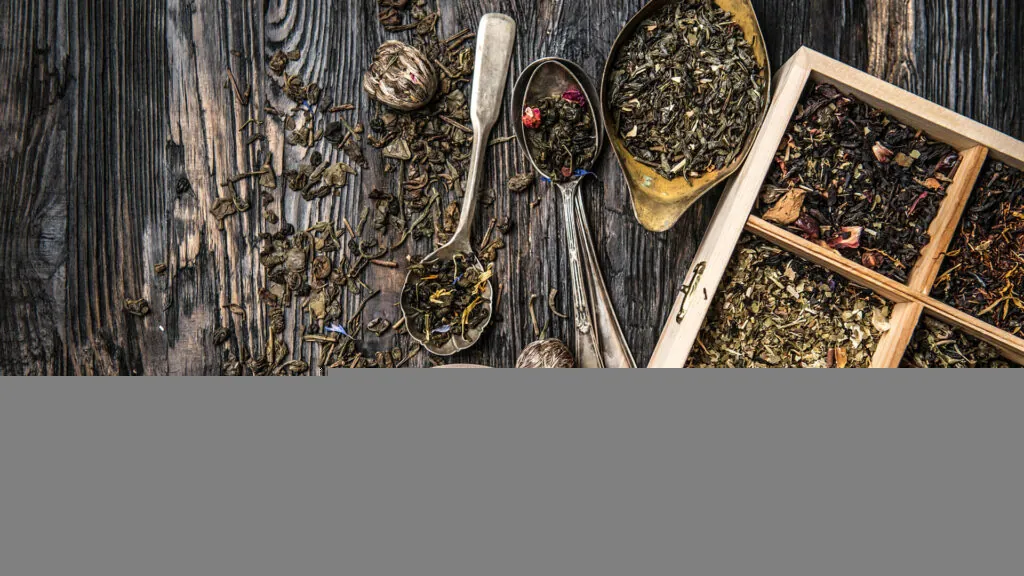
Do you think that tea is divided only into those in sachets and leaf tea? Well, no - its classification is much more complicated and depends on the following factors:
- Harvest seasons (spring, summer, autumn, winter);
- country of origin (China, India, Japan);
- the method of processing after harvesting (black, green, red, yellow, white, oolong tea);
- leaf size.
Black tea classification - what do the abbreviations mean?
You will encounter designations such as:
- Orange Pekoe (OP) - a long leaf that has been left whole. The highest quality tea.
- Broken (B) - leaf broken.
- Fannings - had made from the leaves. They are ground in order to enhance the flavor of the drink, as well as to shorten the time sufficient for its proper brewing. Most often available in the form of sachets dedicated to express use.
- Dust - the lowest quality of tea, often treated as production waste. It is found in the cheapest teas, available in sachet form.
- Flowery Pekoe (FP) - is a form of leaves rolled into balls.
- Pekoe (P) - is a tea consisting of a bud and the first two leaves from the top. However, the leaves are less delicate and shorter than those of OP.
- Souchong (S) - large leaves, rolled into oblong pieces, uneven in size.
- T(Tip) - tea made from undeveloped buds from the very top of the bush
- PS (Pekoe Souchong) means third leaf after bud - contains leaves shorter and tougher than Pekoe
- OP (Orange Pekoe)- the meaning of ordinary tea of basic quality, long, full leaves, obtained from the first and second leaves without a tea bud
- FOP (Flowery Orange Pekoe) - tea with full leaves, with a small amount of tea buds, contains young, tender leaves, the taste is characterized by floral notes
- GFOP (Golden Flowery Orange Pekoe) - FOP tea, containing additional golden buds, to improve its quality
- TGFOP (Tippy Golden Flowery Orange Pekoe) - a high quality tea containing whole leaves and a lot of golden tips.
- FTGFOP (Finest Tippy Golden Flowery Orange Pekoe) - FOP tea of very high quality, containing a large amount of buds
- SFTGFOP (Special Finest Tippy Golden Flowery Orange Pekoe) - the highest quality, specially selected tea, containing buds with floral notes.
If a "1" appears behind the letters indicating the degree of gradation, it means the highest quality tea.
Classification of green tea
In the case of green teas, systematization largely depends on the manufacturer. However, you may encounter quite distinctive terms for this category:
- Imperial - for older leaves, rolled loosely into characteristic balls.
- Young Hyson - for curling young, thin and long leaves.
- Gunpowder - young buds and leaves are rolled very tightly into balls. They develop under the influence of heat already in the cup, during the brewing process.
In the case of green teas, a division can be adopted according to where the tea is grown. Most varieties come from China and Japan. Smaller crops are also found in India, Korea or Vietnam.
Popular green tea varieties from China:
- Green Yunnan
- White Monkey
- Lung Ching
- Bi Luo Chun
Popular green tea varieties from Japan:
- Gyokuro
- Sencha
- Bancha
- Matcha
Classification of oolong tea
Oolong, also known as uulung - is a tea with a distinctive flavor, originally from China, although nowadays you can also find oolong coming from India, Vietnam or Nepal. It is also known as turquoise, green-blue or emerald tea. It is semi-oxidized. Again, its quality largely depends on the classification of the leaves. It is generally considered that the larger and finer they are, the better. The harvesting of the tea is also important - hand harvesting is the most appreciated. Another factor taken into account in determining the quality of tea is the altitude of the area where the harvested leaves grow and also the time of harvesting - the most valued is that carried out in spring and autumn.
FAQ
How many ways are teas classified?
On a lot. It all depends on the species of tea and the method adopted by the producer in question.
Does tea classification matter?
Yes, it determines the quality and therefore the taste we can expect.
What types of teas are classified?
All teas are subject to classification, but there is no one-size-fits-all classification for all types of teas.
Does the method of collection matter?
Yes, the most delicate, young leaves and buds, which are harvested by hand, are considered the most valuable.
Check also
Can you drink green tea while pregnant?
Pregnancy is a time when every expectant mother carefully examines her eating habits and seeks reliable information about the safety of the products she consumes. Expectant mothers often check whether green tea is safe to drink during pregnancy because they want to be absolutely sure that the chosen infusion is completely safe for the baby's health. It's worth knowing the specific rules for its consumption. The most important […]
Does tea raise blood pressure? Everything you need to know
Many hot tea lovers, reaching for their next cup of tea throughout the day, wonder if tea raises blood pressure. The topic of theine's effect on the circulatory system is highly controversial, as the body's response depends on the type of tea and its preparation method. In this guide, we'll explain how different varieties affect blood vessels and help you understand whether your favorite […]

Is tea healthy? Check out its properties and contraindications.
Wondering if drinking tea is healthy as you reach for another cup of your favorite infusion throughout the day? This aromatic beverage has been with us for thousands of years, and modern science is increasingly confirming its unique effects on the human body. In this guide, we'll explore what's hidden in tea leaves, how different varieties support our well-being, and what […]