How much caffeine does coffee have?
Share
Coffee wakes people up
Caffeine is a natural pesticide hidden in coffee beans. It repels insects, but on humans it fortunately has a much milder effect, although more than one person will certainly say that it gives them a "kick." Not surprisingly, caffeine is also one of the most well-known and widely used psychoactive agents of the stimulant group. Naturally, we can also find it in black tea, chocolate, yerba mate or cocoa, although there it often takes on a slightly different name: theine, guaranine or matein.
Properties of caffeine
The stimulating effect of coffee is due precisely to caffeine. It is it that activates serotonin, dopamine and adrenaline in the body, improving our mood, eliminating fatigue
and reducing drowsiness. Caffeine also enhances the cognitive functions of our mind: memory, concentration or learning ability. In excessive doses or if you are allergic to the chemical, caffeine can cause side effects: raising blood pressure, disrupting sleep patterns, inducing drug states or digestive problems. Scientists say its lethal dose is 182 mg for every kilogram of body. However, taken in moderation, caffeine is perfectly safe for our bodies. In order to be able to determine the optimal dose for yourself, it is worth first finding out the answer to the question "how much caffeine does coffee have?".
Caffeine content in coffee - what does it depend on?
This, how much caffeine does coffee have, depends on many factors. We present the most important of them.
- Coffee variety
Some grains are richer and others are poorer in caffeine. For example: the popular Arabica has very little of it, and at least Robusta Up to four times more.
- The degree of burning of the grains
Heat treatment of coffee beans causes a loss of caffeine. Therefore, heavily roasted beans, which are dark brown in color, are poorer in this chemical compound than more lightly roasted beans, which are light brown in color and have the delicate taste of the brew itself
An infusion of them.
- Method of preparation
Soluble coffee has the least caffeine. Coffee brewed or prepared in a pour-over machine has an average concentration. The most caffeine-saturated coffee is coffee from a cafetiere and espresso prepared by the pressure method.
- Proportion of coffee and water
Prepared in a tiny 30-milliliter cup, a double espresso will have more caffeine than the same amount of coffee brewed in a large mug. The less water, the more essential and caffeine-saturated liquid you will get.
How much caffeine does coffee have?
Coffee is unequal to coffee. As we have already established, the caffeine content of the beverage depends on a wide variety of factors. While this cannot be determined super-precisely, it can be estimated, how many mg of caffeine does coffee have of a certain type. Thus: in a 30-milliliter cup of single espresso there are about 65 mg of caffeine, a 250-milliliter cup of traditionally brewed coffee has about 70-140 mg of caffeine, the same amount of instant coffee is only about 50-80 mg, and coffee prepared in a pour-over machine is about 140-200 mg.
How much caffeine does coffee have... decaf?
Despite appearances, the question is quite legitimate. After all, decaffeinated does not mean containing no caffeine at all. So how much caffeine does decaf coffee have? In 100 milliliters of decaf drink there may be 1-7 mg of caffeine, which is really trace amounts. Such a drink can therefore be drunk without fear by pregnant women and people suffering from high blood pressure or digestive problems.
What about milk coffees?
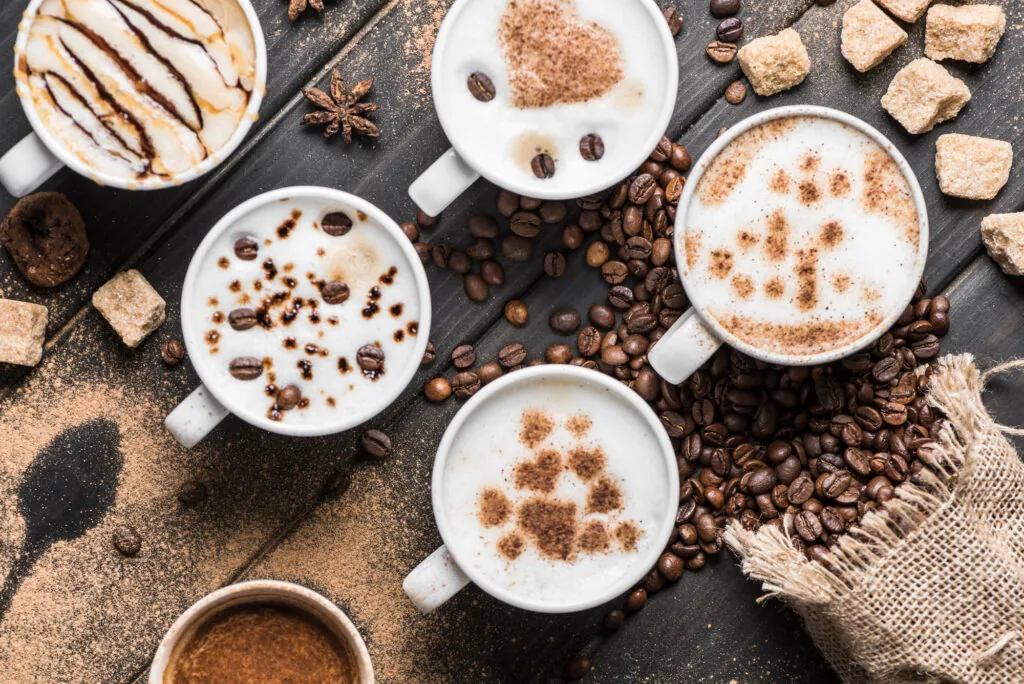
How much caffeine does coffee have Latte macchiato or cappuccino? Quite a lot, and this is because milk coffees are prepared on the basis of espresso, which in itself is, as you know, essential and intense.
How much caffeine does coffee have?
In a nutshell: a traditional espresso has about 65 mg of caffeine, a cup of brewed coffee about 70-140 mg, a cup of coffee from a pour-over machine 140-200 mg, and instant coffee 50-80 mg.
What does the amount of caffeine in coffee depend on?
Among other things, it depends on the variety of coffee, how it is brewed, the degree of roasting of the beans and the ratio between coffee and water.
Is decaffeinated coffee actually caffeine-free?
It contains trace amounts of it. In 100 milliliters, about 1-7 mg.
Do milk coffees have less caffeine than other coffees?
No, milk coffees are prepared on the basis of strong espresso.
Check also
Can you drink green tea while pregnant?
Pregnancy is a time when every expectant mother carefully examines her eating habits and seeks reliable information about the safety of the products she consumes. Expectant mothers often check whether green tea is safe to drink during pregnancy because they want to be absolutely sure that the chosen infusion is completely safe for the baby's health. It's worth knowing the specific rules for its consumption. The most important […]

Does tea raise blood pressure? Everything you need to know
Many hot tea lovers, reaching for their next cup of tea throughout the day, wonder if tea raises blood pressure. The topic of theine's effect on the circulatory system is highly controversial, as the body's response depends on the type of tea and its preparation method. In this guide, we'll explain how different varieties affect blood vessels and help you understand whether your favorite […]

Is tea healthy? Check out its properties and contraindications.
Wondering if drinking tea is healthy as you reach for another cup of your favorite infusion throughout the day? This aromatic beverage has been with us for thousands of years, and modern science is increasingly confirming its unique effects on the human body. In this guide, we'll explore what's hidden in tea leaves, how different varieties support our well-being, and what […]