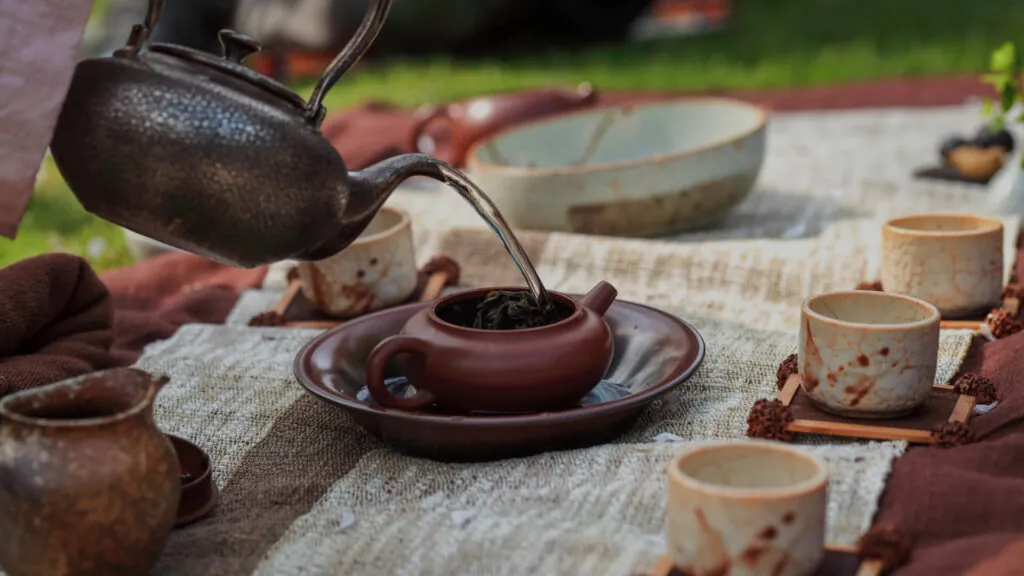
Although the world's most popular golden infusion originates from China, it was the Japanese who transformed brewing and drinking tea into a mystical ritual. The Japanese name for the tea ceremony is cha-no-yu, which literally translates to "boiling water for tea." However, the process is actually much more complex than its name.
Where did tea come from in Japan?
Tea arrived in Japan during the Tang Dynasty (618–907 CE), thanks to the master and founder of Rinzai, one of the two schools of Japanese Zen Buddhism. Its popularity led to the development of a philosophical movement known as Teaism (wabicha), which is still taught in Japan today.
Chanoyu step by step
The tea ceremony itself originated around the 7th-8th centuries AD. According to Japanese tradition, it should be preceded by a short walk through the garden, symbolizing the path of purification. This process is intended to soothe our senses and free us from everyday worries and concerns. Then, once our minds are cleansed, guests enter, in the order designated by the host, a special building designated solely for tea drinking (sukiya). The next step is to carefully wipe all the accessories necessary for preparing and enjoying the infusion with a piece of silk. The dried tea is scooped with a bamboo spoon, poured into a bowl, and then poured with hot water using a bamboo ladle. A bamboo brush is used to stir the tea, creating a delicate froth on the surface. The bowl of prepared tea is served to the first guest, who swirls it twice clockwise and drinks its contents. Then, he wipes the rim of the bowl with his right thumb, turns it twice counterclockwise, and hands it back to the host, who cleanses it and begins preparing the infusion for the next guest. The entire ceremony should be conducted in absolute silence, which promotes contemplation and relaxation.
Check also

Can you drink green tea while pregnant?
Pregnancy is a time when every expectant mother carefully examines her eating habits and seeks reliable information about the safety of the products she consumes. Expectant mothers often check whether green tea is safe to drink during pregnancy because they want to be absolutely sure that the chosen infusion is completely safe for the baby's health. It's worth knowing the specific rules for its consumption. The most important […]
Does tea raise blood pressure? Everything you need to know
Many hot tea lovers, reaching for their next cup of tea throughout the day, wonder if tea raises blood pressure. The topic of theine's effect on the circulatory system is highly controversial, as the body's response depends on the type of tea and its preparation method. In this guide, we'll explain how different varieties affect blood vessels and help you understand whether your favorite […]

Is tea healthy? Check out its properties and contraindications.
Wondering if drinking tea is healthy as you reach for another cup of your favorite infusion throughout the day? This aromatic beverage has been with us for thousands of years, and modern science is increasingly confirming its unique effects on the human body. In this guide, we'll explore what's hidden in tea leaves, how different varieties support our well-being, and what […]